

For decades, the United States has occupied an extraordinary position in the international system. Its military power has extended far beyond its own borders, deterring adversaries and providing a degree of security upon which numerous countries have come to depend. That role has proven quite consequential in the Indo-Pacific, where American military power has become deeply embedded in the regional security architecture.
Under President Donald Trump, however, the terms of that relationship are changing.
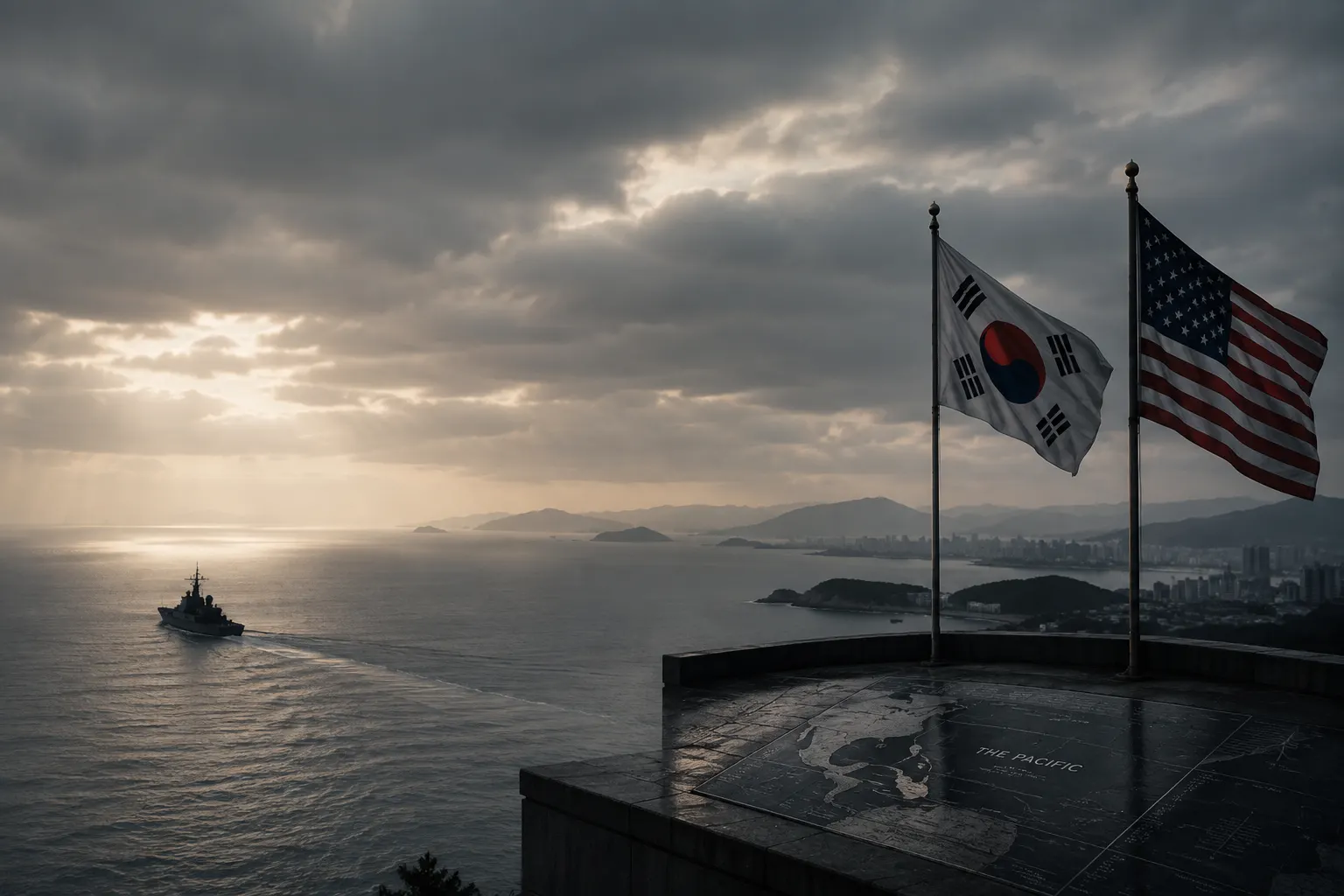
At the 2026 Shangri-La Dialogue in Singapore, Secretary of War Pete Hegseth presented a vision of American engagement in the Pacific that has contributed to a divided conversation about Washington’s long-term intentions. To some observers, recent American decisions are evidence of the United States gradually stepping back from its traditional role in Asia, however, the American administration presents the intended changes differently, positioning them not as moves toward abandonment, but as a transition from dependency to partnership.
Hegseth’s argument was that the United States does not intend to leave its Pacific allies to defend themselves. Rather, the administration appears to be challenging an arrangement in which wealthy allied nations can rely disproportionately upon American resources for their security.
“The era of the United States subsidizing the defense of wealthy nations is over,” Hegseth told the Shangri-La Dialogue, arguing instead for alliances based on shared responsibility.
This philosophy fits naturally within Trump’s broader America First approach to foreign policy. For decades, the United States has spent enormous sums maintaining military installations, deploying personnel and equipment abroad and contributing to the defence of allies across Europe and Asia. The Trump administration is now asking whether those arrangements remain sustainable, and whether countries benefiting from American protection should assume greater responsibility for their own defence.
That question does not automatically signal hostility toward America’s allies.
A sovereign government has an obligation to consider its own national interests. If Washington believes American resources have been stretched too widely, reallocating some of those resources toward domestic and national security priorities is not inherently synonymous with isolationism. Indeed, a stronger United States may ultimately be better positioned to assist its allies when circumstances genuinely demand it.
In August, Trump ordered the Pentagon to scale back joint military exercises with South Korea shortly before the exercises were scheduled to begin. He cited their cost among his reasons and also pointed to his relationship with North Korean leader Kim Jong Un and South Korea’s unwillingness to support Washington’s position in the war with Iran. The exercises continued, but on a more limited basis.
The decision caused concern in Seoul. It also followed reports that Terminal High Altitude Area Defence missile interceptors previously positioned in South Korea had been redirected for American requirements in the Middle East.
From Seoul’s perspective, these developments inevitably raise questions. South Korea exists beside a nuclear-armed North Korea that continues to demonstrate its ballistic missile capabilities. Pyongyang launched ballistic missiles in August even as Washington was reconsidering aspects of its military cooperation with Seoul.
From Washington’s perspective, however, another interpretation is possible.
The United States is presently managing military commitments beyond the Pacific. A decision to redeploy American equipment where it is urgently required does not necessarily demonstrate an intention to permanently abandon an ally. It may instead expose the difficult reality confronting a global military power: even the United States does not possess unlimited resources.
This is where the administration’s concept of shared responsibility becomes particularly important.
Hegseth described the new approach as a movement away from dependency and toward genuine partnership. In practical terms, Washington wants its allies to contribute substantially to their own security rather than assume that American resources will always provide the first and largest response. This position becomes easier to understand when allies such as South Korea have declined to support the United States in its current war with Iran. It would be difficult to expect Washington to provide extensive defence support to an ally while accepting that similar support may not be available when the United States itself is engaged in conflict. From this perspective, the administration’s call for greater burden-sharing is also a call for greater reciprocity within its alliances.
For the Trump administration, this represents the maturation of America’s alliances. For critics, it risks weakening the very relationships that have helped preserve American influence.
Both concerns deserve consideration.
An alliance cannot function effectively if one member believes it is carrying an unsustainable share of the burden. But alliances also depend upon predictability. If governments in Seoul, Tokyo, Manila and elsewhere begin questioning whether American military support will be available during a crisis, they will inevitably begin considering alternatives.
Those alternatives could transform the Indo-Pacific.
Countries may accelerate their own military expansion. They may build stronger security relationships with neighbouring states. Some may attempt to maintain greater strategic distance between Washington and Beijing. In more extreme circumstances, prolonged uncertainty over American security guarantees could intensify debates about whether countries should develop more independent deterrent capabilities.
Interestingly, the administration also appears to be simultaneously pursuing greater communication with Beijing. Hegseth has argued for maintaining open military-to-military channels with Chinese counterparts as a means of reducing miscalculation and ensuring that competition between two enormously powerful countries does not accidentally escalate into conflict. If the United States and China can maintain a more stable relationship, there may also be greater room for productive negotiation when tensions arise, reducing the risk of disputes developing into war. In this sense, America appears to be positioning itself not only as a military power, but as a potential mediator. If tensions grow between China and neighbouring countries, direct American military intervention may no longer need to be the first response if diplomacy and stronger regional partnerships can successfully contain the situation.
The combination of deterrence without unnecessary confrontation may prove central to understanding Washington’s evolving Pacific strategy. America appears to be reassessing unnecessary expenditure and military interventions that may no longer be sustainable or effective. If some of these long-standing strategies have become outdated, continuing them could place unnecessary strain on the United States while ultimately doing little to strengthen the security of its allies.
The deeper question, therefore, may not be whether America is leaving Asia at all.
It may be whether the United States is attempting to renegotiate what American leadership looks like.
For much of the post-war era, Washington’s alliances were built around extraordinary American economic and military capacity. The United States could station forces overseas, provide security guarantees and underwrite an international order on a scale few other nations could approach. But the world of 2026 is not the world in which those arrangements were originally created.
China is considerably more powerful. Asian economies are considerably wealthier. America’s military commitments are spread across multiple regions, while domestic pressure increasingly demands that American resources serve American priorities first.
It is therefore reasonable for Washington to ask its allies to do more.
But how it asks may prove just as important as what it asks.
Sudden reductions, unexpected redeployments and public disagreements can easily be interpreted as signs of declining commitment, even when Washington’s intention is merely to redistribute responsibility. Strategic ambiguity can occasionally deter adversaries; uncertainty among allies can have the opposite effect.
America therefore faces a delicate task.
It must convince its partners that greater self-reliance does not mean abandonment, while also persuading them that the security arrangements of the past cannot remain unchanged indefinitely. Its allies, meanwhile, must adjust to a future in which partnership with Washington may increasingly require greater financial, military and political contributions of their own.
If that transition produces stronger allies capable of defending shared interests alongside the United States, Washington’s new approach may ultimately create the more sustainable system Hegseth envisions. If, however, those changes convince allies that American guarantees can no longer be relied upon, the result could be precisely the instability the policy is intended to prevent.
The future of American power in the Indo-Pacific may therefore depend less on whether Washington remains present than on whether its allies continue to believe that presence can be counted on.
As global power dynamics evolve, The Western Diplomat will continue to monitor Washington’s strategic presence and defense commitments across the Indo-Pacific region.