
Where are you from? This may seem like simple question.
For millions of people today, understanding the meaning of belonging is far more complicated than many realise.
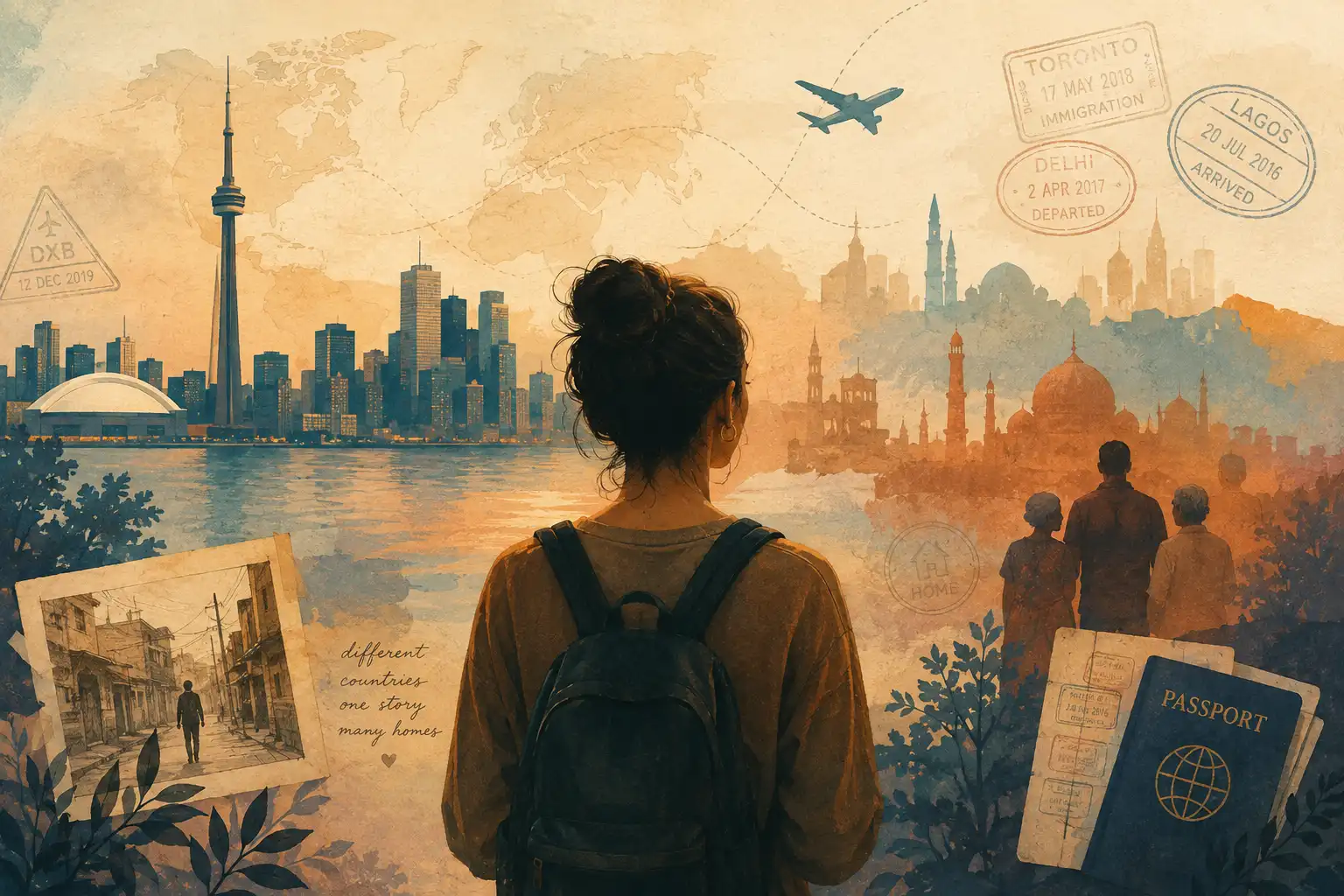
You may have been born in one country, raised in another and now live in a third. Your parents may come from somewhere you have never lived, while the language spoken around your childhood dinner table is different from the one you used at school and now at work. Your passport may identify you as belonging to one nation, while the people, traditions and memories that make you feel at home stretch across several.
Migration is not new. Human beings have always moved in search of safety, opportunity, love and a better life. What has changed is the scale of modern mobility and the ease with which people can maintain relationships with places thousands of miles away.
The United Nations estimates that there were approximately 304 million international migrants worldwide in 2024, almost double the number recorded in 1990. Together they represent roughly four per cent of the global population. Behind those numbers are millions of people developing relationships with countries that do not fit neatly within traditional ideas of nationality.
A generation is emerging for whom home is becoming increasingly difficult to define.
For some, this begins with economic migration.
A nurse leaves the Philippines to work in Britain. An engineer from India moves to Dubai. A Caribbean professional relocates to Canada. A young graduate from Nigeria builds a career in the United States.
The decision may initially be practical, but over time something more complicated happens. Lives take root. Children are born. Friendships develop. Homes are purchased. Years pass.
The country that was supposed to be temporary becomes permanent.
Yet the country left behind doesn’t disappear.
Modern technology has made this relationship particularly interesting. Previous generations of migrants might have waited weeks for letters from home or saved money for an expensive international telephone call. Today, families separated by oceans can speak every morning. Weddings can be watched through a screen. Grandparents can see grandchildren grow up through video calls. Music, television, newspapers and food from home can travel almost instantly.
Migration therefore no longer requires the same degree of cultural separation it once did.
A person can physically live in Toronto while remaining deeply involved in life in Kingston. Someone in London can wake up reading news from Lagos, send money home before breakfast and spend the evening speaking with relatives there.
In a sense home has become portable.
Money has strengthened these connections as well.
Remittances sent by migrants to relatives in lower- and middle-income countries amount to hundreds of billions of dollars each year. In some countries, these flows represent a significant share of the national economy. Migration is therefore not simply the movement of people away from a country. Those who leave often remain economically connected to the places they came from.
Countries increasingly court their diasporas as investors, tourists, advocates and sources of expertise. Some offer dual citizenship or special investment programmes. Others organise diaspora conferences or encourage nationals abroad to contribute to development projects at home.
The migrant who once might have been viewed simply as someone who left is increasingly understood as a connection between two economies and two societies.
Modern Mobility and the Changing Meaning of Belonging
But living between countries can also create questions of belonging.
Children of migrants often experience this most clearly.
They may grow up hearing that they are Jamaican, Pakistani, Ghanaian or Vietnamese while spending almost their entire lives somewhere else. At home they inherit traditions from their parents. Outside, they absorb the culture of the country in which they live.
Sometimes they are told they are not quite enough of either.
Visit the country your parents came from and someone may call you foreign. Return to the country where you were raised and someone may ask where you are “really” from.
For these generations, identity becomes something constructed rather than simply inherited.
It can contain several places at once.
This is also quite visible in pop culture. Food, fashion, music and language travel with migrant communities and change as they encounter new environments. The result is not always the preservation of one culture inside another, but the creation of something new.
Cities such as London, Toronto, New York, Dubai and Singapore have become places where nationality and identity constantly overlap. Restaurants, neighbourhoods, festivals and businesses reflect histories of migration that have changed the character of the cities themselves. Just as the diplomat is changing in modern international affairs, global citizens are reshaping local societies.
Migration also changes the countries people leave.
The departure of educated workers can create serious shortages, particularly in healthcare and other skilled professions. Small and developing states can spend considerable resources educating people who later take their skills elsewhere.
But, those same migrants may send money home, establish businesses, create international networks or eventually return with experience and capital.
The relationship is rarely straightforward.
It’s also worth mentioning that migration is not always voluntary.
War, political instability, persecution and economic desperation continue to force millions of people from their homes. For refugees and displaced people, the question of belonging can carry an entirely different weight. Home may be somewhere they desperately want to return to but cannot.
Climate change is likely to complicate this further.
Rising seas, drought, extreme heat and increasingly destructive weather could push more communities to relocate within and beyond national borders. For some populations, migration may eventually become less about seeking opportunity and more about whether the places they call home remain habitable.
That raises difficult questions about what nationality means when geography itself becomes uncertain.
The passport remains one of the world’s most powerful documents. It determines where a person can travel, where they can live and often how easily they can access opportunity. Borders remain very real.
But emotionally and culturally, the boundaries are becoming less tidy.
Perhaps this is why asking someone where they are from increasingly tells us less than it once did.
The better question may eventually be: Where is home?
For some, home is still the town where they were born and where generations of their family have lived.
For others, it is an apartment in a country their parents never imagined them living in.
And for a growing number of people, home may not be one place at all.
It may be the country on their passport, the country in their memories, the country their parents still call home and the place where they are building a future.
All of these can be true at the same time.