
For much of modern history, international affairs have been told through the actions of great powers. The United States, China, Russia and Europe’s major states dominate discussions about war, trade, security and diplomacy. Smaller nations often appear in these conversations as allies; territories of strategic importance or countries caught between competing interests.
But the balance is becoming more complicated.
Across the Middle East, Asia and other regions, countries that cannot compete with the world’s largest military and economic powers are finding different ways to exercise influence. Some are positioning themselves as mediators. Others are building regional alliances, controlling strategically important resources, investing abroad or maintaining relationships with countries that barely speak to one another.
The result is an international system in which middle powers are becoming increasingly difficult to ignore.
There is no universally accepted definition of a middle power. Generally, the term describes countries that do not possess the overwhelming economic or military strength of a superpower but still have enough diplomatic, economic or strategic influence to shape international events.
Countries such as Qatar and Oman provide particularly interesting examples.
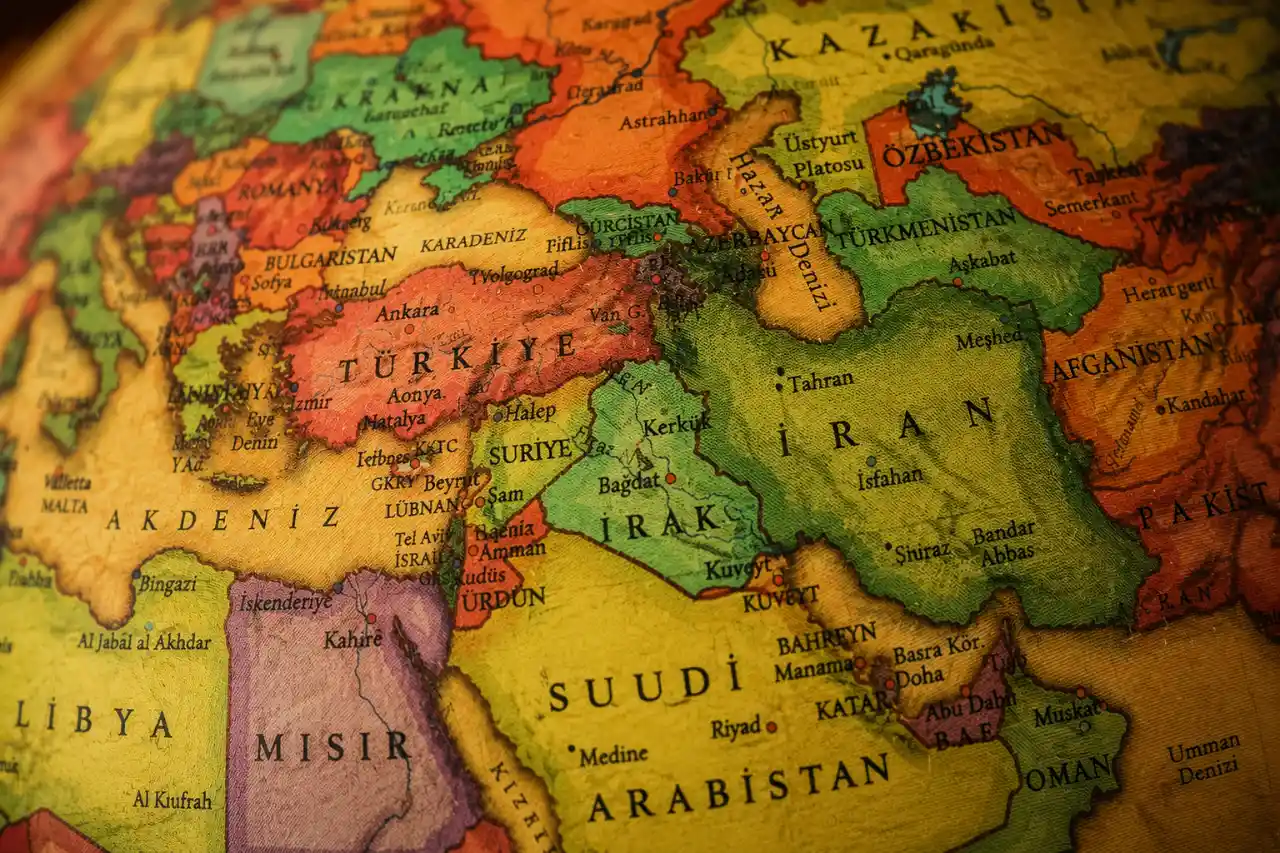
Neither could realistically challenge the United States or China militarily. Yet during the continuing conflict involving the United States and Iran, regional diplomacy has repeatedly depended upon governments capable of maintaining channels of communication where direct relationships have deteriorated.
Oman has been involved in efforts surrounding navigation through the Strait of Hormuz, while Qatar has participated in attempts to reduce tensions and create space for diplomacy. Recent negotiations have again demonstrated how countries that may appear small on a map can become exceptionally important when they possess something military strength cannot easily create: trust.
Trust can become a form of power.
A country capable of speaking to Washington, Tehran and other regional actors occupies a unique position. It may not determine the outcome of a conflict, but it can carry messages, clarify intentions and provide neutral ground when direct negotiation becomes politically impossible.
Pakistan has also assumed a growing diplomatic and strategic role in the Middle East. Alongside Qatar, it has participated in efforts aimed at de-escalating the conflict with Iran. At the same time, Pakistan has strengthened its defence relationships with other regional states.
In August, Saudi Arabia, Turkey and Pakistan signed a joint defence agreement in Mecca. The agreement commits the three countries to regard an attack on one as an attack on all, creating a significant new security arrangement at a moment of considerable instability in the Middle East. The countries have since begun discussions on military cooperation, interoperability and defence production.
The development is significant not simply because of what it suggests about the changing international system.
Countries that have traditionally maintained important relationships with the United States are increasingly developing additional security arrangements among themselves.
This does not necessarily mean they are rejecting Washington. Instead, they appear to be building more options.
The emerging international order is not simply dividing into countries that support the United States and countries that support China or Russia. Many governments are attempting to maintain productive relationships with several major powers simultaneously.
Indonesia has long followed what it calls a “free and active” foreign policy. This means that the nation opts to refrain from joining major global power blocks or military alliance and instead seeks to actively work for and toward world peace. As competition between Washington and Beijing has intensified, Jakarta has continued expanding economic ties with China while maintaining strategic relationships with the United States and other partners.
Such an approach allows countries to avoid making an unnecessary choice between powerful states whose cooperation they may need for very different reasons.
China may be an essential trading partner. The United States may remain important for security. Gulf countries may provide investment. Neighbouring states may be necessary for regional stability.
Foreign policy therefore becomes less about choosing one camp and more about managing several relationships at once.
This is one reason middle powers may possess greater leverage in a more fragmented world.
When one dominant power overwhelmingly controls an international system, smaller states have limited room to manoeuvre. But when several powerful countries compete for influence, governments positioned between them can suddenly become valuable partners.
They have choices.
Those choices can be converted into investment, security cooperation, trade agreements and diplomatic influence.
The Middle East offers an especially visible example of this shift. Saudi Arabia has spent years expanding its diplomatic relationships beyond its traditional partnership with Washington. Turkey remains a member of NATO while pursuing an increasingly independent foreign policy. Qatar has transformed its relationships, wealth and willingness to mediate into influence far greater than its geographic size might suggest.
None of these countries has replaced the traditional great powers. Nor are they likely to.
But influence does not always require dominance.
A government that controls an important shipping route, possesses critical minerals, supplies energy, hosts strategically important military facilities or maintains access to rival governments can matter enormously at the right moment.
Even neutrality can become an asset.
This creates opportunities for smaller states, but it also creates risk.
Maintaining relationships with competing powers requires careful diplomacy. A country attempting to remain close to several rivals can eventually face pressure to choose between them. Economic dependence can limit political independence, while security partnerships may come with expectations that become difficult to avoid during a crisis.
There is also a danger in overstating the independence of middle powers. The United States and China still possess economic and military capabilities far beyond those of most countries, while Russia remains capable of influencing security far beyond its borders. Smaller states operate within a system these powers continue to shape.
What appears to be changing is their ability to negotiate their position within it.
The world may therefore be moving away from a system in which influence flows almost exclusively from the largest capitals.
Power is becoming more varied.
Military strength still matters. So does economic size. But geography also matters, as does energy, technology, access and relationships. And increasingly, the ability to communicate with governments that cannot communicate with one another matters.
For countries traditionally considered too small to shape international affairs, this creates an opening.
The most influential states of the coming decades may not all be those capable of overpowering their neighbours. Some may be the countries capable of connecting them, negotiating between them and knowing when competition among greater powers can be turned to their own advantage.
In an increasingly divided international system, being somewhere in the middle may no longer be a weakness.
It may be precisely where some of the world’s most interesting power now lies. As global alignments continue to shift, The Western Diplomat will continue to provide in-depth analysis on how middle powers redefine modern geopolitics.



[…] The Return of the Middle Power: Why Smaller States Are Becoming Harder to Ignore […]
[…] The Return of the Middle Power: Why Smaller States Are Becoming Harder to Ignore […]
[…] The Return of the Middle Power: Why Smaller States Are Becoming Harder to Ignore […]