

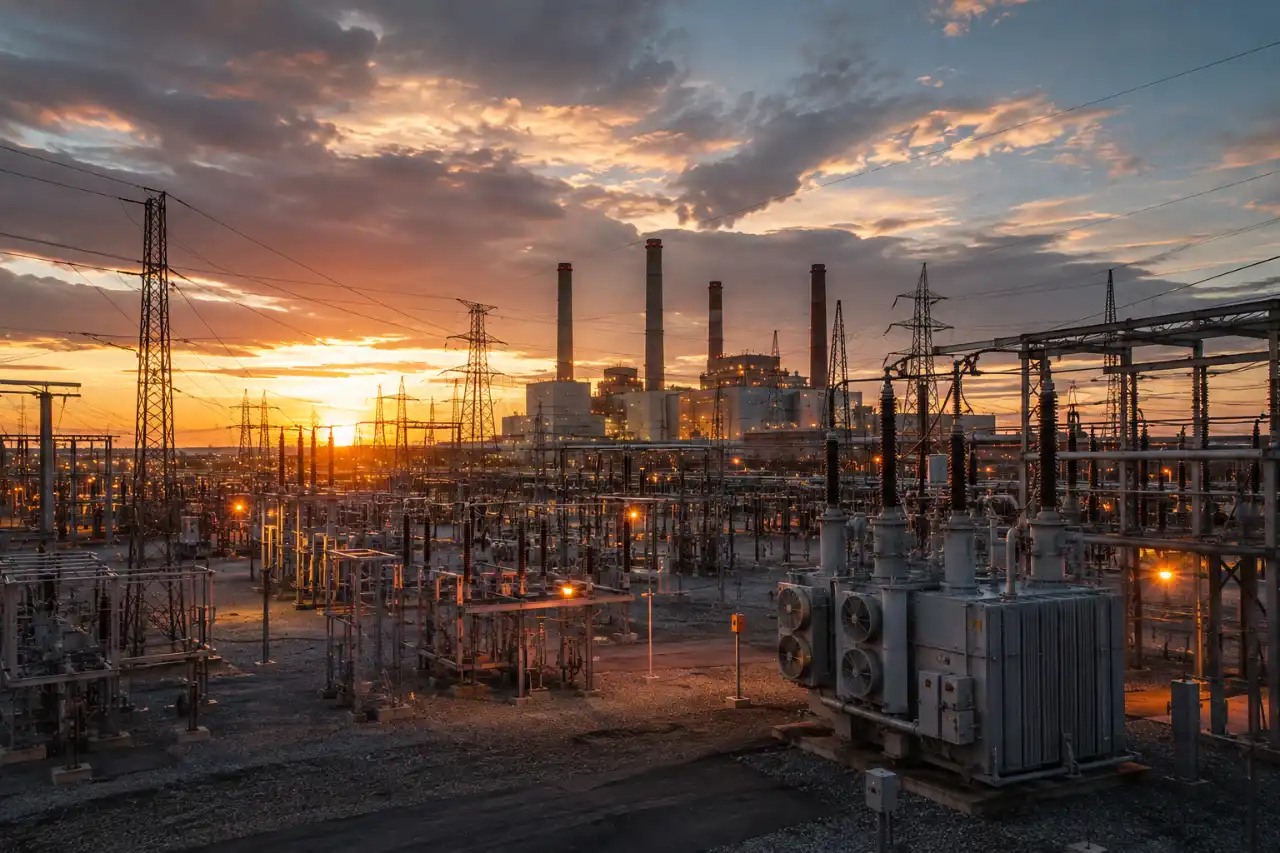

At first glance, the competition to dominate artificial intelligence appears to be primarily a race for better technology. Understanding the global AI Energy Race is becoming essential as tech giants compete for power generation alongside computing power.
Who has the best models? Who can secure the most advanced chips? Which company can recruit the strongest researchers and build the largest computing infrastructure?
Increasingly, another question is moving to the centre of the competition.
Who has enough electricity to run it all?
Artificial intelligence may exist in the digital world, but the infrastructure supporting it is remarkably physical. Behind every large AI model are data centres filled with processors that consume enormous amounts of electricity, produce considerable heat and require extensive cooling and networking infrastructure.
As companies build larger systems and governments pursue national AI ambitions, access to reliable power is becoming part of the competition itself.
According to the International Energy Agency (IEA), data centres consumed approximately 415 terawatt-hours of electricity globally in 2024, accounting for around 1.5 per cent of global electricity consumption. Under the agency’s base-case projection, that consumption could more than double to approximately 945 terawatt-hours by 2030. The IEA identifies artificial intelligence as an important driver of that growth and projects electricity consumption by accelerated servers, which are primarily associated with AI adoption, to increase particularly quickly.
That changes the AI conversation.
A company may have the capital to purchase thousands of advanced processors as well as talented engineers and ambitious technology policies.
But none of it works without power.
The Data Centre Grid Pressure in the AI Energy Race
The problem is partly one of speed.
Technology companies can develop data centres considerably faster than countries can build major energy infrastructure.
According to the IEA, a data centre can become operational within two or three years, while the broader energy system generally requires longer lead times to plan and construct new infrastructure. Power generation and transmission projects can require extensive planning, significant investment and lengthy approval and construction processes.
In the United States, regions expecting enormous data-centre growth are confronting questions about whether their electricity systems can accommodate it.
Texas offered a striking example earlier this year.
According to reports by Reuters, Texas recently became the first major American data-centre hub to freeze new grid connections for the facilities while authorities investigate proposed projects. A Reuters review of utility and grid data also found that electricity requests from very large power users, predominantly data centres, exceeded 700 gigawatts across parts of the Midwest, Mid-Atlantic and South.
But there is a complication: not every request represents a data centre that will actually be built.
This problem is referred to as “ghost demand.”
Reuters says that regulators and consumer advocates have raised concerns that some electricity requests may be duplicated or submitted by developers without the financing or expertise necessary to complete their proposed projects. The news agency also found that some utilities significantly reduced their data-centre demand projections after introducing stronger financial requirements, including upfront payments and collateral.
For electricity providers, this creates difficulties.
Build too much infrastructure and consumers could ultimately face some of the cost of investments made for data centres that never arrive.
Build too little and a region may discover that its electricity system cannot accommodate projects that actually do.
AI therefore creates an unusual infrastructure challenge: governments and utilities must prepare for extraordinary potential growth without knowing exactly how much of it will materialise.
Big Tech goes looking for electricity
Technology companies are not waiting for the traditional power system to solve the problem.
They are increasingly becoming active participants in energy markets themselves.
Some of the world’s largest technology companies have pursued agreements involving nuclear energy, renewables and other sources of reliable generation.
One of Google’s latest moves demonstrates the trend particularly clearly.
On September 1, Fervo Energy announced a 396-megawatt power purchase agreement with Google for geothermal energy from its Cape Station project in Utah. The electricity is intended to support a potential Google data centre in the state, demonstrating how the rapid expansion of computing infrastructure is pushing major technology companies to secure reliable, around-the-clock sources of power.
Nuclear power is also receiving renewed attention.
The AI boom does not necessarily care whether electricity comes from a fashionable technology. It cares whether large quantities of power are available reliably and at an acceptable cost.
That reality is creating opportunities across the energy industry.
According to the IEA, renewables are expected to meet nearly half of the additional global electricity demand from data centres through 2030. Natural gas and coal are also expected to play important roles in meeting near-term growth, while nuclear power becomes increasingly significant later in the decade and beyond. The agency also notes that technology companies are among the corporate supporters of emerging nuclear technologies, including small modular reactors.
More recent IEA analysis shows how quickly that relationship is developing. The agency reported in 2026 that the technology sector accounted for around 40 per cent of corporate renewable power-purchase agreements signed in 2025 and had also become an important source of momentum for advanced geothermal and nuclear projects.
The infrastructure behind artificial intelligence may therefore produce one of the more unexpected consequences of the technology boom: renewed investment across multiple forms of electricity generation.
Geography suddenly matters again
The internet once encouraged the idea that technology could make geography less important.
AI infrastructure is demonstrating its limits.
Data centres need land. They need electricity. They need access to transmission infrastructure, cooling systems, fibre-optic networks and suitable locations.
The pressure is particularly intense because data centres tend to cluster in the same locations. According to the IEA, nearly half of existing data-centre capacity in the United States is concentrated within just five regional clusters. That can place significant pressure on local electricity systems even though data centres still represent a relatively small proportion of electricity consumption globally.
This could begin to influence where the next generation of AI infrastructure is built. The next important AI hub may not simply be the city with the largest technology industry. Increasingly, it may be the place with the electricity, land and grid capacity to support it.
It could be wherever is capable of providing abundant power.
Regions with strong electricity systems, available land and the ability to approve infrastructure quickly may acquire an advantage that has little to do with writing better algorithms.
Energy-rich countries could benefit as well.
Governments that can combine competitive electricity costs with investment-friendly policies may be able to attract data centres and computing infrastructure that would once have clustered primarily around established technology centres.
In that sense, AI could create a new geography of technological power. Just as smaller middle powers leverage strategic assets in global diplomacy, energy-rich nations may control the digital infrastructure of the future.
But who pays for the grid?
There is a political question underneath all of this.
When a data centre arrives in a community, who should pay for the infrastructure necessary to support it?
The company?
The utility?
The government?
Or ordinary electricity customers?
This debate is likely to become increasingly important.
Large data centres can bring investment, construction activity and tax revenue. But they can also place extraordinary demands on local electricity systems.
If utilities must build new transmission lines or generation capacity, regulators will have to determine how those costs are distributed.
The concern is not simply whether enough electricity can be produced. It is also whether consumers could end up bearing some of the cost of preparing the grid for projects that never materialise.
Given that there are both those for the advancement of AI and those against it, there is bound to be concerns over the funding of these infrastructure projects.
A new strategic resource
The implications stretch beyond technology companies.
Governments view leadership in artificial intelligence as an economic and national-security priority. The United States and China are competing over advanced chips, computing capacity and technological standards, while countries elsewhere are developing their own AI strategies.
Energy belongs in that conversation.
A country that wants enormous domestic computing capacity will need the electricity infrastructure to support it.
That may influence decisions about nuclear energy, natural gas, renewable development, electricity grids and permitting that initially appear unrelated to artificial intelligence.
It may even affect foreign policy.
Countries possessing energy resources, critical infrastructure or locations suitable for large-scale computing could find themselves occupying more important positions in the global technology economy.
The race for artificial intelligence is no doubt expanding.
First came the race for talent.
Then came the race for chips.
Then came the extraordinary construction of data centres.
Now, behind all of them, is the race to secure the electricity capable of keeping those machines running.
The irony?
The technology presented as the future of the digital world is becoming increasingly dependent on some of the most physical infrastructure humans have ever built: power stations, transmission lines, cooling systems, cables and land.
Artificial intelligence may ultimately become extraordinarily sophisticated.
But even the smartest machine in the world is useless when the power goes out.